Are you kidding me? Who on earth needs to do relationships classes? We just do relationships and if they work out, they work out and if they don’t, we just move on, right!
Well, what if I told you that we can learn about relationships, so that we can understand each other better and we can also understand ourselves better. That there is actually a science and many studies on relationships that are really helpful. These are Polyvagal Theory and Attachment Theory.

This is not some woo woo thing when we look at ourselves. We can actually measure our emotional health by our heart rate variability (HRV) that gives us a direct measure of our autonomic nervous system (ANS). If our HRV is low for our age, we know something is not quite balanced in our ANS. It could be a lack of sleep, it could that we have over trained, it could be that we are stressed and stuck or it could mean that there is something medically wrong within our body.
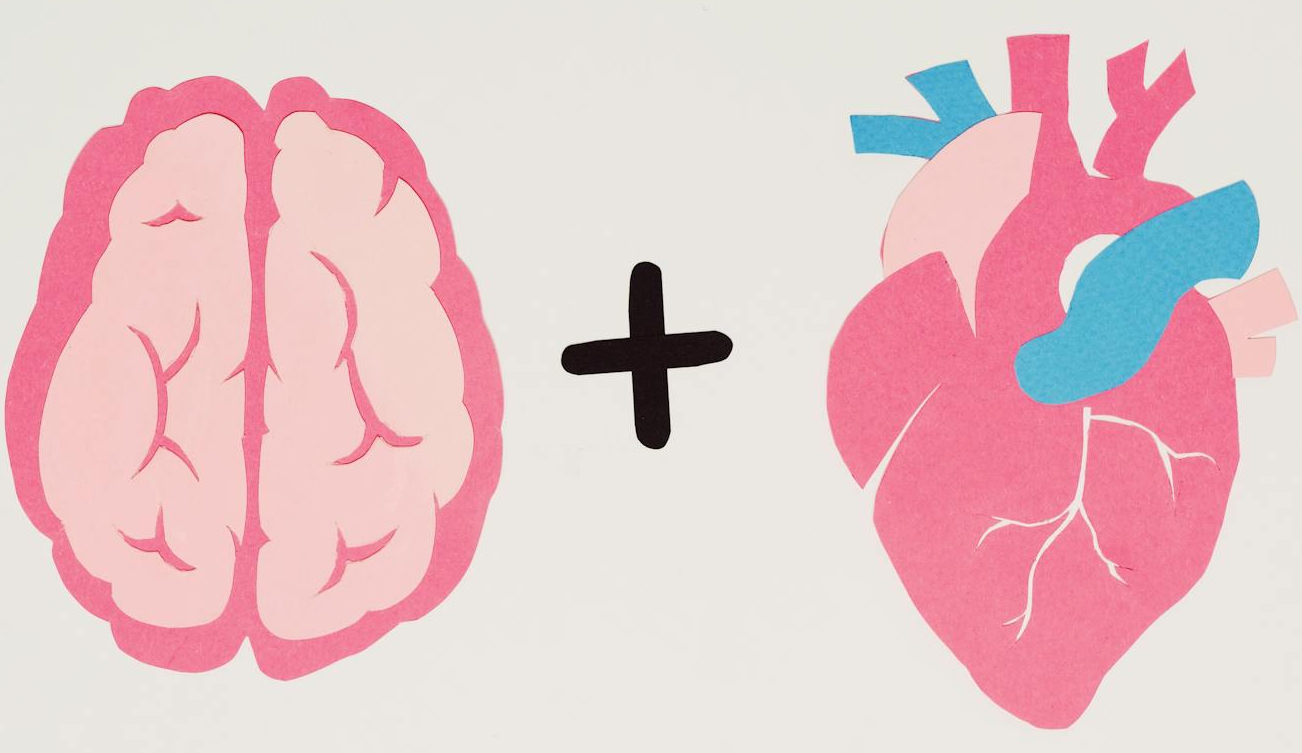
Like science has taught us – how do we know if we don’t measure it. Relationships and science – yes. How does measuring our HRV to know our ANS help with our relationships? Dr. Stephen Porges has over the past maybe 50 years now developed his theory called – Polyvagal Theory. At the start of his career, he was studying pre-mature babies and their heart rate. He noticed that their heart rate dropped very low. He realised that the babies ANS was doing this as a survival mechanism. While society was conversant with the ‘Flight/Fight state of our ANS, Dr. Porges discovered we had another state of our ANS. He called this Dorsal Vagal. Instead of there being two states of our ANS, in Polyvagal Theory there are three states and a hierarchy of these states; Ventral vagal, Sympathetic (Fight/Flight) and Dorsal Vagal.
How does this Polyvagal Theory affect our relationships? Our neurobiology has developed over the millions and millions of years of our existence as humans to be social. We have a social brain like all mammals yet ours is a little bit more sophisticated because of our language and our ability for insight or introspection. Like other mammals we can also feel feelings and feel safer in companionship. Us humans actually learnt to survive better when we were closer to other humans. We had each other’s back when we were in our own groups or tribes! The more civilized we became the more sophisticated our housing became and the less chance we also had of wild animals eating us.

While most of the humans of world has less chance of being prey, you’d think that the threat response would be reduced, and we could live at ease. Yes and no. Humans still have an instinct to fight, remember that is embedded in our ANS. It is still necessary for our survival to activate this automatically via our ANS. While the threat to our survival may not be ferocious animals it has become different. Most of the threats we feel are from each other both emotionally and physically. This is where we tie in the relationship part. We all have history. Our DNA has history. And everything can get really confusing from here when we bring in relationships. Let’s keep it simple! In Polyvagal Theory terms if we are in states of protection (Sympathetic (Fight/Flight/Freeze/Fawn) or Dorsal Vagal then we are not in a state of connection. We need to be mainly in Ventral Vagal to have capacity to have healthy relationships. I say mainly, because we also do have some necessary mixed states that are activated in play and love making for example. However, with a healthy balanced ANS we come back to regulation fairly quickly. A balanced ANS means we return to ventral vagal sooner rather than getting stuck after a stressful event.
For most part we no longer have wild animals threatening our existence, we live is homes, we earn income, and we can buy food. Why do we find each other threatening and we want a divorce after finding that that same person was the love of our life two years previously?
- Unresolved trauma,
- relational wound,
- attachment wounds,
- An accumulation of life stresses-
- work,
- current relationship,
- loneliness,
- financial,
- environmental,
- health,
- chronic pain,
- poor quality of nutrition and
- lack of quality of sleep.
Why do Relationship Classes and learn about Polyvagal Theory and our ANS? So, we can understand the WHY.
Why we behave, react or respond in relationship the way we do.
Is it part of our ancestors? is it how we learned to survive in the family home? is it from events in our life that rocked us to our core? is it from an accumulation of life stresses? Most of the time our current relationship will give us hints of why and when. Sometimes it is our current relationship, then we can look at what did we miss about this person and why were we attracted to this person. Never is it about blame. It is about understanding. We bring awareness to the situation and what happens to our physiology (our body sensations). Polyvagal Theory gives us a pathway and direction that we can understand. We know trauma happens when we couldn’t flee or fight. Then we learn to activate what needed to be activated. Relational and attachment wounds that happened in our childhood may need the opportunity be heard what wasn’t allowed to be voiced.
- The body sensation
- then the action or voice and
- then the witness because we heal relationally, not alone.
Then why Attachment Theory and not love languages?
In the name of science and research. Attachment Theory started evolving around the 1960’s with John Bowlby and then with one of his colleagues, Mary Ainsworth and her research called ‘Strange Situation.’ By 1969 it was called Attachment Theory. John Bowlby was a psychoanalysis and rejected some of Freud’s theory’s and in return Bowlby was ostracized by the psychoanalytic society until later after many publications and research then there was an attempt to reconcile with Bowlby. The research of attachment theory focused on the relationship between the child and significant caregivers, usually mother and father. These then became significant relationships and reflected what happens in adult-to-adult relationships. The critical time a child was developing its relational part of the brain from womb to 3 years of age was how the neurobiology was being formed in the infant. In short, the child through its significance relationships learnt to thrive or survive. Then when the child grows up and begins having adult to adult relationships whatever was learnt in childhood in significant relationships is mirrored in adult relationships. This can also get very complicated (that’s why I developed an 8-week course). This is the hard thing that people grapple with adult relationships, and it does take time to unravel (and we usually do this until we die it just doesn’t get so overwhelming like in the start) –
As a child we learn about relationships implicitly. In other words, it is not directly taught to us like learning how to read or do math. We learn about relationships by the relationships around us as a child and how we are treated as a child by our significant caregivers. It becomes automated within us. Relationships are out of our awareness until which time we decide to bring it back into our awareness. This is usually the time when couples are on their last legs and take the plunge to see a relationship therapist to try to see if the relationship is salvageable. The relationship therapist will help willing couples bring deeper awareness to their behaviours.
Gary Chapman was a minister with the Baptise church and counselled many young couples. He wrote the book The 5 love languages in 1992 from what he heard in his counselling sessions. In a way I could do the same about my private practice, but it will not be an empirical study. Yes, it would come from experience, but it will not be a robust study that can be published in an esteemed professional journal. I know many people rely on and relate to the 5 love languages in their relationship –
- Words of affirmation (compliments)
- Quality Time
- Gifts
- Acts of service
- Physical touch
While the Love Languages are relatable, they lack the understanding of why. It merely accepts this is how I am and what I like. Where Attachment Theory gives us a why we are the way we are and gives us a solution to improving relationships. Love Languages says after finding out which one most applies to you or your partner this is how I am to treat you. Therefore, to fill the relationship love bank with love languages we are to do one of these things for our partner. Attachment Theory is more nuanced than that. It gives us understanding and the imperative of our humanness that we all crave connection, we all need physical touch since birth, we all need to feel attuned with by our significant parents or partner and because language is our human thing – we all like to hear words of affirmations.
Attachment Theory has the bigger bang for its buck. It gives us the scope to change towards secure attachment. The late Dr. Sue Johnson said it best. The underlining question about Attachment Theory is “Are you there for me?”
- Are you attuned enough that you can hear when I’m reaching for you and needing to hear your reassurance to me?
- Are you attuned enough to hear me when I need to spend time with you?
- Are you attuned enough to hear me when I need you to surprise me and know that I have been in your thoughts?
- Are you attuned enough to hear me when I need you to help me out?
- Are you attuned enough to hear me when I need to physically feel you and for you to feel me?
- And this is all reciprocated
Attachment Theory helps us understand how very human we are – imperfectly perfect. We can yield with our partners when we can hear the vulnerability of their attachment story and how it presents in adult life. Sometimes this validation is the process of healing and being able to move towards secure attachment. We can move towards secure because our neurobiology is plastic we don’t have to be set in a particular way.

I haven’t touched what the four main categories of Attachment Theory are here. I guess you’ll have to attend my relationship classes to find out or you could do your own research. But I will say learning about relationships on your own can be very lonely. We are not meant to do things on our own. Even my dogs (mammals) don’t let me be on my own or maybe they don’t like to be on their own as I’m writing this blog. Our relational brain developed good enough or not when we were children through relationship, same then as when we are adults – we heal relational wounds in relationships. This is not saying our partners heal us, no not that. Again, it is more nuanced than that. What I can say is that if our ANS is activated (triggered) in relationship then it is an ahh hah moment of that’s a relational wound that needs understanding.

Between understanding Polyvagal Theory and Attachment Theory is what I consider the greatest scope to be the best human being we can be and to live to our potential and enjoy life and relationships. This is the premier relationship toolkit. This is reason why to do relationship classes.

WE
Try my Introductory classes –
Registration for the Relationship Courses here


 Maria Hull Noosa Counselling